
Vehicle shipping is no longer limited to point-to-point. Many customers nowadays require more flexbile transport arrangements, particularly during moving happenings, dealership transfers, family moves, seasonal travelling or multi-vehicle shipping situations. One increasingly common questions is whether a carrier can legally deliver vehicles to more than one destination during a single shipment.
Indeed, it is a yes. Often, with proper coordination with licensed carriers and transport companies, it is possible to legally arrange multi-destination vehicle delivery. Nonetheless, before requesting this type of service, there are some important logistical, legal, and scheduling considerations customers should know.
Legalizing multi-destination delivery assessment benefits clients’ planning in advance and minimizing confusion during long-haul delivery. When shipping a number of vehicles for a family move, or when dealerships need deliveries made in multiple states, proper planning of the multi-stop transport job will make it much smoother and safer.
What Vehicle Delivery to Multiple Destinations Means
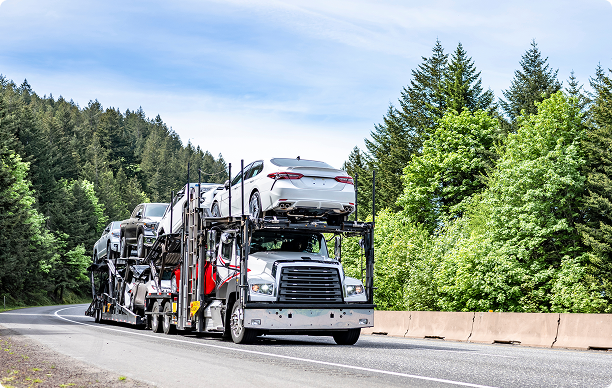
When you request multi-destination shipping, you are asking the carrier to deliver the vehicle to multiple locations.
- A family is sending two cars to different states.
- A dealership that provides stock to more than one customer.
- Residents who have two homes are splitting out the delivery of their new vehicles.
- Businesses relocating vehicles to various offices
A customer relocating from Texas, for instance, could arrange for one vehicle to be delivered to Arizona while another is taken to California, all within the same transport run.
Coordination of this type occurs regularly in the auto transport industry when routes, scheduling and carrier capacity allow.
Use transport coordinators from us
Manpower assists customers in structuring their multi-stop deliveries with careful route planning for smooth execution.
While multi-stop transport is allowed, the carrier must still comply with all federal and state transportation regulations in the shipment.
Licensed carriers must continue adhering.
- FMCSA rules.
- Weight limitations.
- Regulations on driving hours.
- Insurance needed for cargo.
- Vehicle handicap standards.
An illustration of this situation would be a delivery with multiple stops that does not cause the carrier to exceed legal trailer weight limits or driver work-hour limits.
Logistics experts of professional transport companies plan routes in a way so that all operating conditions remain compliant during shipment.
Customers must only work with.
- Accredited freight carriers.
- Transport brokers are confirmed.
- Shipping Firms Covered.
- while preparing more advanced delivery schedules
Planning routes is becoming important
Multi-destination shipping takes much more planning than door-to-door.
Carriers have to think about.
- Delivering your Order.
- Location based routing
- Access to interstate highways.
- Cost of fuel and time.
Size and weight of vehicle
For instance, delivering cars to a few nearby cities may not require precise scheduling, but when the stops are far apart and across several states, that may require adjustment.
Transport coordinators frequently establish routes for.
- Reduce lag time.
- Cut down mileage.
- Keep Legal Driving Logs
- Enhance gas mileage.
Routing that is well organized keeps multi-stop transport legal and operationally efficient.
We always clear with customers how having multiple destinations may affect the routing, timing and pricing.
Different Pricing Structures Should Be Expected By Consumers
Multi-destination deliveries are usually price differently than single-destination deliveries.
Many things affect costs.
- Total no. of stops.
- Route difficulty.
- Extra distance.
- Time of delivery.
- Kind of vehicle.
- Carrier accessibility.
For instance, if a second delivery point is added several hundred miles off the main route, both fuel costs and scheduling difficulty will likely increase.
Customers must enquire.
- Are extra stops charged additionally?
- Certain companies do per-stop fees.
- Does deviation of route affect pricing?
- Off-route deliveries can raise overall transport costs.
- Do Multiple Vehicles Cost Less?
Multi-stop transport is more about timing and flexibility
People who ask for multiple places should have a greater flexibility requirement when it comes to scheduling.
The Why is an important question we can ask ourselves to understand why we want to take on something. Why is a question we should always keep asking. Due to the need for coordination by carriers.
- Several delivery appointments.
- The state of traffic.
- Operator Timetable.
- Transport Routes in Existence
In case of a delivery delay at one location, other deliveries may also be slightly delayed.
- Pickup periods.
- Delivery predictions.
- Communication information.
- Rerouting necessary.
Greater flexibility will usually enhance carrier availability and may even reduce pricing from highly inflexible scheduling requests.
Customers should validate
People to get in touch with for each destination
- Contact numbers for delivery.
- Choose another contact.
- Most convenient delivery time.
- Parking or access prohibitions.
A carrier that drops a car in a residential neighborhood and another one at a dealership will have different unloading requirements for the two.
- Effective communication helps avert.
- Misdelivered parcels.
- Confusion involving scheduling.
- Late delivery due to absent consignee.
These shipments gain significant value through dispatch coordination.
Ownership and authority must be clearly defined
For legal multi-destination delivery it is also important to verify vehicle and delivery authorization properly.
Permission of third-party recipients
For instance, commercial auto transport companies may require the written authorization before the carrier releases the car from their transport truck for delivery to a family member or dealership representative.
Documentation may include helpful.
- Agreement forms signed.
- Contact validation.
- Copies of vehicle registration.
- Document the delivery guidelines.
Both carrier as well as customer are protected with proper documentation for shipment.
Multi-destination delivery work fine under certain condition
This kind of shipping arrangement is especially useful for.
Moving families
Family members may move to different cities.
Selling Dealership
Multiple buyers may need delivery of inventory.
Business Moves
Certain Fleet Vehicles are Unassigned to a Certain Branch Office
Temporary Residents
Different homes may house different vehicles.
For instance, retirees with homes in both Florida and New York may schedule different deliveries of vehicles based on their travel plans.
The Importance of Expert Coordination
Transporting to more than one destination done by simply adding extra addresses.
Coordinators with industry experience.
- Order arrangement.
- Timing of Delivery.
- Driver timetable.
- Adherence to law.
- Consumer correspondence.
Shipping may face issues without coordination.
- Inefficient routing.
- Trouble with documentation.
- Unforeseen expenses.
When you work with experienced professionals, they keep all the pieces organized during shipment.
Improving multi-stop freight shipping success
Typically, the earlier the clients discuss their multi-destination plans, the smoother the dispatch process is.
When planned ahead, transport teams can.
- Develop effective paths.
- Direct drivers properly.
- Prepare accurate pricing.
- Organize scheduling adaptability.
Is it possible to set up multi-destination delivery legally? Sure. When routes, schedules, insurance, and other operational matters are properly managed, licensed carriers and professional transport companies regularly coordinate many deliveries.
When you’re shipping cars to a family member, dealership, seasonal residence, or several business locations, it’s important to plan it out and coordinate professionally so that it happens smoothly and safely.
ensures that the multi-destination delivery stays transparent, compliant and professionally co-ordinated at all times.
